
 630-393-3111
4200 Cantera Drive, Suite 200 | Warrenville, IL 60555

-

- Home
- Firm Overview
- Attorneys
- Practice Areas
- Divorce
- Allocation of Parental Responsibility and Decision Making (Child Custody)
- Parenting Time / Visitation
- Spousal Maintenance / Alimony
- Modifications to Child Support and Spousal Maintenance
- Modifications to Allocation of Parental Responsibility, Child Custody and Parenting Time
- Parent & Child Relocation / Removal
- Child Support
- Enforcement of Judgments
- Finances and Divorce
- Businesses and Divorce
- Mediation
- Family Law
- Divorce
- Appeals
- Testimonials
- Blog
- Contact
Is My Illinois Prenup or Postnup Valid?
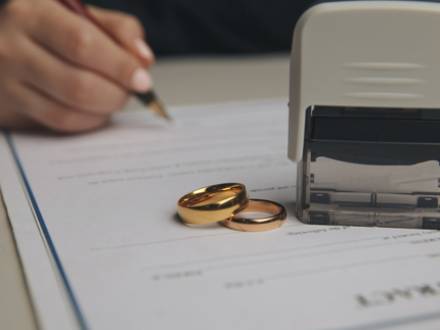 To protect individual property, safeguard business assets, and for various other reasons, many couples choose to sign prenuptial or postnuptial agreements. While no one goes into a marriage expecting to get divorced, it can be beneficial to both parties to prepare for the possibility, since almost half of all marriages do end in divorce.
By preparing a valid agreement, both parties can protect their financial interests and remove any uncertainty should a divorce come about. However, there are certain issues that can invalidate an agreement that both spouses should understand. Having a skilled legal advocate on your side can help clear up any issues with your agreement. At Calabrese Associates, P.C., our Naperville, IL divorce attorney previously served as chair of the DuPage County Bar Association Family Law Committee, and he has a deep understanding of the rules surrounding prenups and postnups.
What Can Invalidate a Marital Agreement in 2026?
A prenuptial or postnuptial agreement serves the same function no matter when it is signed. It does not matter whether the couple signs before the wedding or after they are already married. Either type of agreement can be used during the divorce to settle issues such as the division of marital assets and spousal maintenance payments.
However, there are a few reasons why such an agreement may be invalid and unenforceable. These can include:
One Spouse Did Not Sign Voluntarily
The agreement could be ruled invalid if one spouse signed the agreement under duress or based on coercion. This can include being pressured to do so by their spouse or being rushed to sign before the wedding could take place. It can also include lacking the mental capacity to understand the agreement.
The Agreement Includes Illegal or Invalid Terms
If an agreement included provisions about child support, child custody, or other issues that cannot be included in such an agreement, those terms or even the whole agreement can be ruled invalid. Prenuptial and postnuptial agreements typically only address issues surrounding property and finances.
It Was Not Executed Correctly
The agreement is only valid and enforceable if both parties sign the document. In cases of a prenuptial agreement, the agreement must be signed before the marriage takes place to be valid. The burden is on the accusing party to prove the document was not signed willingly.
The Terms Are Grossly Unfair
If the terms of the agreement are too unconscionable or severely lopsided to favor one spouse, an agreement may be invalidated by the court. This can include if one spouse can show that they did not have full financial information about their spouse when the agreement was signed, including having hidden or undervalued financial obligations or assets.
Are There Any Requirements to Set Up a Prenup or Postnup in Illinois?
Illinois law sets out a few basic formalities for a prenup to be considered valid (750 ILCS 10/3). Illinois does not require the agreement to be notarized or witnessed. Even so, many couples choose to have the agreement notarized anyway, since it can help prove later that both spouses actually signed it.
There is no requirement to file the agreement with a court. A prenup or postnup is simply a private contract between two spouses, and it becomes enforceable once the marriage takes place. Both spouses must also be legally able to enter into a contract at the time of signing. This generally means both spouses must meet the legal age requirements for marriage in Illinois.
Since the formal requirements are fairly simple, couples sometimes assume that a prenup or postnup will automatically hold up in court. However, meeting these basic requirements is only the first step. A signed, written agreement can still be challenged later on other grounds.
How Long Do You Have to Challenge a Marital Agreement in Illinois?
Illinois does not set a strict deadline for challenging every part of a prenup or postnup. Instead, most challenges come up during divorce proceedings, when one spouse asks the court to set aside the agreement, in part or in full. Waiting too long to challenge an agreement can hurt your case. Delays can make it harder to gather evidence in cases where one spouse relied on the agreement for years.
Timing can affect the outcome of a marital agreement dispute. Anyone who suspects their prenup or postnup was signed under pressure, based on false information, or without proper disclosure should speak with a family law attorney as soon as possible.
What Are the Most Common Uses of a Prenup or Postnup?
Couples use prenups and postnups for many reasons beyond preparing for a possible divorce. These agreements can protect both spouses by setting clear expectations early in the marriage. Common uses include:
- Protecting a family business or inheritance from being divided in a divorce
- Outlining how debts brought into the marriage will be handled
- Clarifying property rights for a spouse entering the marriage with significant assets
- Protecting children from a previous relationship by preserving their inheritance
- Establishing how shared property will be divided if the marriage ends
- Addressing spousal maintenance, also known as alimony, ahead of time
These agreements are not only for wealthy couples. Many people use a prenup or postnup simply to avoid confusion and conflict later. A clear agreement can reduce stress during a divorce and help both spouses understand their rights from the start. When drafted properly and with full disclosure, these agreements can offer real peace of mind for both spouses heading into marriage or working to strengthen their partnership.
Contact a Naperville Prenuptial and Postnuptial Agreement Lawyer
For questions about the validity of your prenup or postnup agreements or for any other divorce-related legal needs, you can trust the DuPage County, IL divorce attorney at Calabrese Associates, P.C. Whether you are looking to enforce a valid agreement or argue that a previous agreement should be invalidated, our firm can help address your concerns. We can also help you and your soon-to-be-spouse craft a valid agreement under Illinois law. Call our office at 630-393-3111 today to set up an initial consultation.
 4200 Cantera Drive, Suite 200, Warrenville, IL 60555
 630-393-3111





Contact Our Firm
 The use of the Internet or this form for communication with the firm or any individual member of the firm does not establish an attorney-client relationship. Confidential or time-sensitive information should not be sent through this form.
I have read and understand the Disclaimer and Privacy Policy.